
 Change payment button by yours, upload the sales page and the product to your hosting. Now, your only task is to get products with rights of resale of the subject of your interest. And start to resell them. Form No. 3: Special reports.
A special report is an electronic mini-book, of 5 to 12 pages long. Within this mini book should deliver valuable information, but incomplete. And within its content, promote affiliate programs that relate to the special report that you created. Our recommendation is that you give these minilibros. In this way you will be making viral promotion.
If a person reads your content is useful, it is safer to share it with other people. And it is thus propagated virally. Your report must be focused to a market niche specific and focused entirely on the pre-selling affiliate products. Form No. 4: Interviews create products information through interviews is one of the easiest ways of making money online. In fact, it may be the laziest generation of content that exists. Packaging an interview also is easy. You can present the interview as a written transcript, a transcript of audio or both. You can offer a downloadable mp3 file or can record the entire interview to CD, put an attractive label, and sell it. Form No. 5: Video-Seminarios. Do you want to know something interesting about Video seminars? That there are very few!. Here there is a great opportunity, because very few know how to create one. A video seminar, requires advance planning and a willingness to overcome the stage of fear. The average seller avoids the Video-Seminarios because he feels intimidated by the idea of appear and speak in real time. But if you mastered a topic and not afraid of public speaking, you could create and sell video-seminarios. The field is wide open and you could exploit it. With this I end the explanation of the five quickest ways to earn money on the internet! Right it is very easy to make money online? Simply become an expert in only one of the earlier forms of making money online. AND begin achieving those amounts of money that always dreamed of earning on the internet.
 Emperor Hiroto, placed its vision in direction to the French and British colonies in the Southeast of Asia, however, the North American government embargoed the supply suppliments and fuel, infuriating the emperor who answered in day 7 of December, with an attack surprise the North American base in the Hava, Pearl Harbor. Then the president of U.S.A., Franklin Delano Roosevelt declared war against Japan, yielding to the apelos of the British first-minister Winston Churchill, initiating a great coalition with the Allies. What it brought victories and bloody combats as in Egypt hindering the conquest it the Suez Canal, in Stalingrado taking force for reconquers, and in Kursk with the advance of the red Army to arrive Berlin in 1943. In 4 of June of 1944 the Allies take Rome, making with that Italy asked for surrender. The activities of espionage and counterespionage initiated for the Allies three years before putting in practical a release plan of France with a huge landing, that would go to reach the victory on the forces of Hitler in the front Occidental person of the War. It is come close hour of our bigger persistence and action, this will be one day of interminable and bloody battle, marches with courageous allies who count on us, as we count on them. In air, in the sea and the land and when the signal will be given the group of the avenging nations will go to launch itself on the enemy. General Dwight D. Eisenhower, Supreme Commander of the Force Allied Member of an expedition for the Overlord Operation.
 Specialty drinks, gifts and edible works of art make that Christmas dinner is a much anticipated family event and that in many countries of the world, the Christmas dinner is the most important event throughout the year. Each family or circle of friends who gather to celebrate Christmas dinner can add their own variations and flavors of these traditional foods, but you can also see that many foods used for Christmas dinner are common in many homes. Christmas cookies are one of the foods of Christmas that inspire the spirit of the festivities in the young and old alike. Cookies can be easily found in batches and Christmas baskets. It is also common that families come together to prepare their own cookies, making forms preferred by each person for their Christmas biscuits. Turkey is another food that is used worldwide for the Christmas dinner so many lots and Christmas baskets have included this food. Turkey is a food that is really delicious and has different ways of preparation that make Turkey Christmas dinner can be an attractive food.
 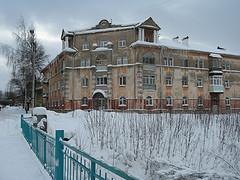 Sometimes viewed photographs of the exotic beauty of the overseas countries and catch yourself on what you begin to envy those who see these views every day. But if you think that surround us place no less than perfect and in its own exotic – its bright, watercolor beauty of spring floods of the rivers, sunny colors camomile summer meadows, majestic temples, streamed into the sky golden dome. Enough to travel across the Vladimir region, not only to personally verify this, but also "to draw in their faith" friends and acquaintances. To a great extent "treatment" will promote and brought gifts, souvenirs and gifts which are generous and plentiful this region. Starting trip from any cities in the region, for example, with the oldest – Murom. The first mention of it historians date ix century. It is the home epic warrior Ilya of Murom, the monument which stands on the shore Oka. No, a monument to you home with no takes.
  Would it be better if you could work from the comfort of your home? There are companies around the world who are hiring people to work from home. The following are some of the advantages of working from your own home gives you freedom to use your time the way you want, take a break at any time without there being any problem as long as you have finished your obligations, You can take the time you want to create and innovate without having to worry about anything. When looking for a job online, you will see numerous opportunities and options. It is not difficult to find a job online when you know where to look. Be sure to do a self-assessment before applying for jobs online. First determine what type of activities you can perform with relative ease and can help others, also the level of knowledge with which accounts, that depends on success in specific jobs online.